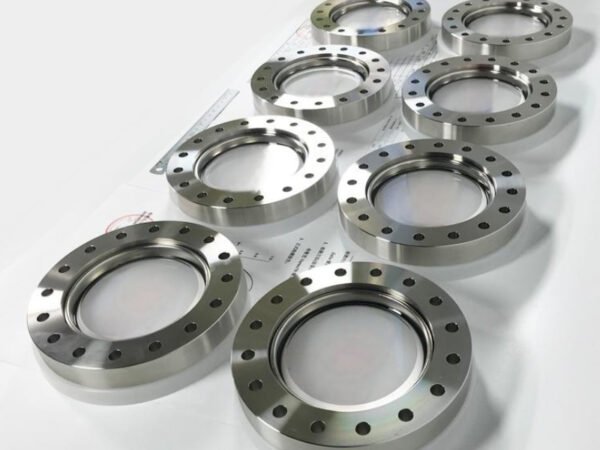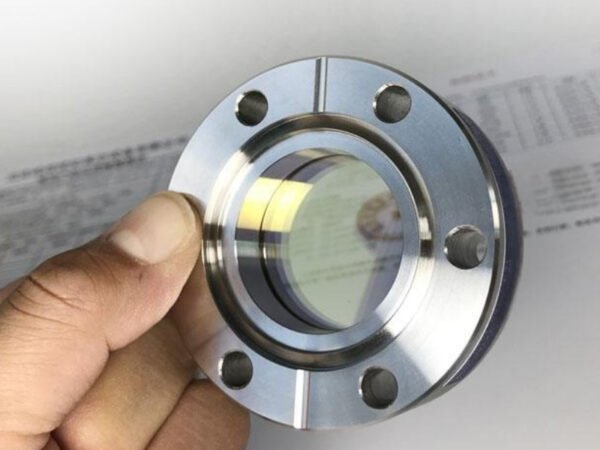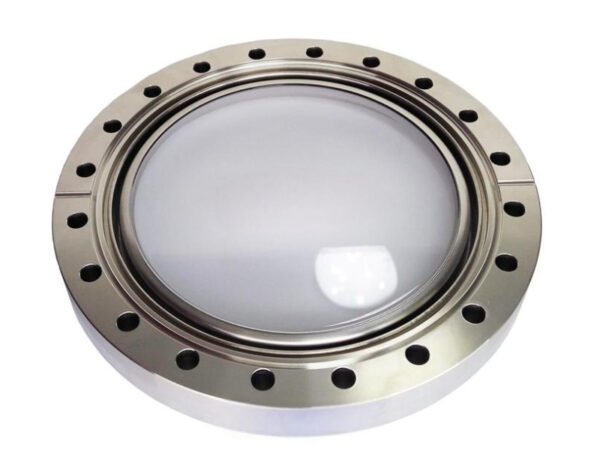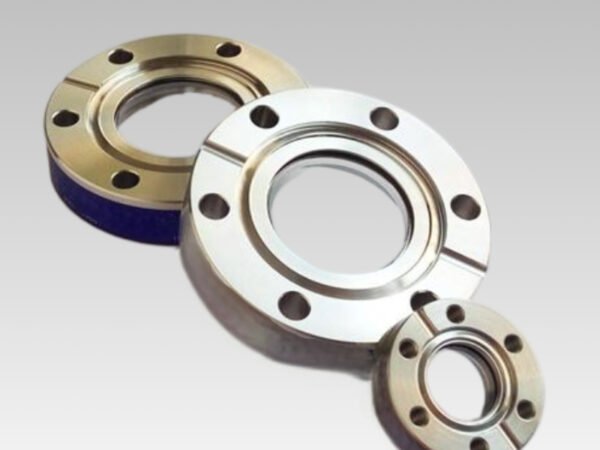
Sapphire is a general term for corundum gemstones of all colours except ruby. Its main constituent is aluminium oxide (Al₂O₃). Blue sapphire gets its colour from trace impurities of titanium (Ti) and iron (Fe). Sapphire can also be pink, yellow, green, white, or even feature multiple colours within a single crystal.
Main Properties of Sapphire Crystal
(1) White sapphire crystal exhibits excellent optical transmittance, covering the wavelength range of 0.15~7.5 μm, including ultraviolet, visible, near-infrared and mid-infrared bands.
(2) It has a linear expansion coefficient of only 5×10⁻⁶ /°C, a melting point of 2050°C and a maximum service temperature up to 1900°C, delivering outstanding thermal shock resistance and high-temperature performance.
(3) It possesses superior mechanical properties: Mohs hardness of 9, together with excellent compressive strength and flexural strength.
(4) It features good packaging performance, maintaining high vacuum inside hermetic systems with zero leakage even under severe thermal cycling shocks.
(5) It has excellent radiation resistance and electrical insulation performance.
Single-crystal α‑Al₂O₃ sapphire is widely adopted in electronic components and aerospace systems thanks to its outstanding mechanical performance, optical properties, high thermal conductivity and high-temperature resistance.
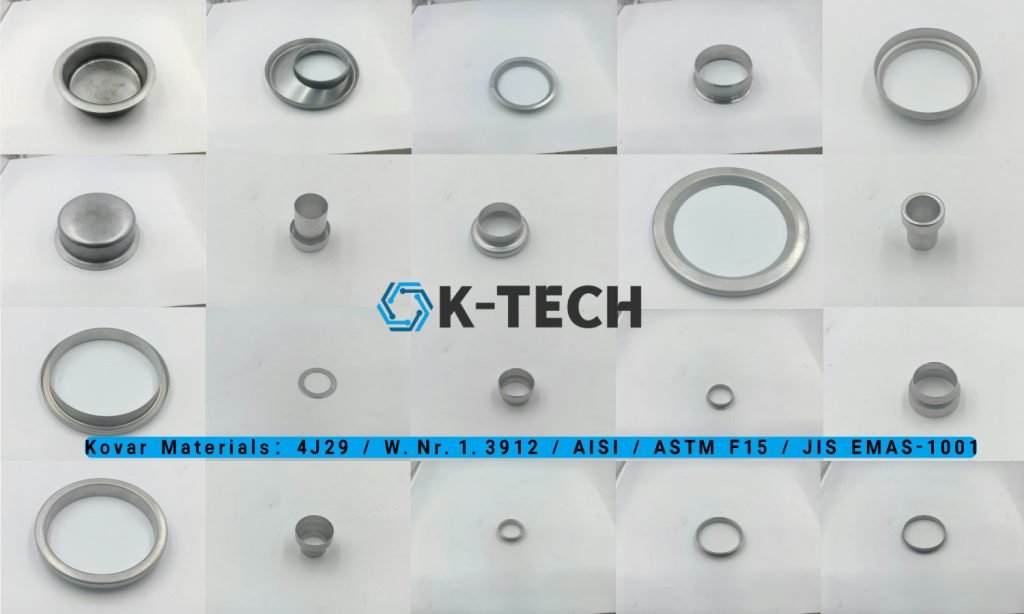
The active brazing solution for sapphire and Kovar alloy is summarised below:
Core Process Parameters
- Filler metal: Ag-Cu-Ti active brazing alloy containing titanium
- Brazing temperature: 850–870°C (liquidus controlled within 780–860°C)
- Vacuum requirement: Furnace vacuum of 1×10⁻³ ~ 5×10⁻⁵ Pa
- Holding time: 5 / 10 / 20 minutes
Key Surface Preparation Procedures
- Mechanical grinding: Sapphire surface is ground with diamond compound and 150# to 500# abrasive paper to Ra ≤ 0.25 nm.
- Chemical cleaning: Ultrasonic cleaning in acetone to remove organic contaminants.
- Optional pre-metallisation:
- Magnetron sputtered multilayer: Cr (70 nm) / Ni (300 nm) / Au (1.3 μm) to improve wettability.
- For direct active brazing, surface roughness must be ≤ 0.1 μm.
Interfacial Reactions of Brazed Joints
- Interfacial chemical reactions:
- Reaction between Ti and Al₂O₃: 3 Ti + Al₂O₃ → 3 TiO + 2 Al
- Secondary reactions generate Ti‑Cu oxides (e.g. Cu₂Ti₄O, Cu₃TiO₄), forming a gradient interfacial layer.
- Microstructure constituents:
- Sapphire side: Submicron TiC/TiO reaction layer (approx. 10–15 nm)
- Braze seam centre: Ag solid solution + Cu solid solution + Cu‑Ti intermetallic compounds (e.g. Cu₃Ti₂)
- Kovar alloy side: Fe‑Ti‑Ni diffusion layer
- Typical joint structure: Sapphire / Ti‑O‑Cu / Ag‑Cu solid solution / Cu‑Ti‑Fe / Kovar
Performance Test Data of Brazed Joints
- Shear strength: Reference range: 72.5 MPa (sapphire / 99% alumina ceramic) to 95 MPa (reinforced with CoCrNi medium-entropy alloy)
- Helium leak tightness: Leak rate ≤ 5×10⁻¹³ Pa·m³/s
- High-temperature stability: After annealing at 600°C for 6 hours, the residual stress is relieved, and joint strength reaches 79.6% of the base material strength.
Optimisation Directions for Brazing Process
- Filler metal modification:
- Add indium (In) to lower melting point (AgCuInTi liquidus at 495°C) and reduce thermal stress.
- Introduce CoCrNi medium-entropy alloy to suppress brittle phases.
- Process control:
- Stepwise heating to avoid thermal shock: 20°C/min up to 500°C → 10°C/min to brazing temperature.
- Precision pressure control: 1800 Pa pre-pressure to guarantee interfacial wetting.
Typical Application Cases of Sapphire-to-Metal Brazing
- Military optoelectronic systems: F‑16 forward-looking infrared window (ϕ600 mm sapphire brazed to titanium alloy)
- Space-borne optical windows: Atomic clock resonant cavity (Al₂O₃/YAG sapphire bonded to Kovar, leak rate ≤ 1×10⁻¹⁰ Pa·m³/s)
Conclusion
By optimising the Ag‑Cu‑Ti filler metal (Ti content: 2–4.5 wt%) and adopting vacuum brazing at 850°C with a holding time of 6–20 minutes, high-strength, low-stress bonding between sapphire and metals can be achieved. When the interfacial reaction layer thickness is below 15 nm, shear strength reaches the 70 MPa level, satisfying military-grade reliability requirements.